
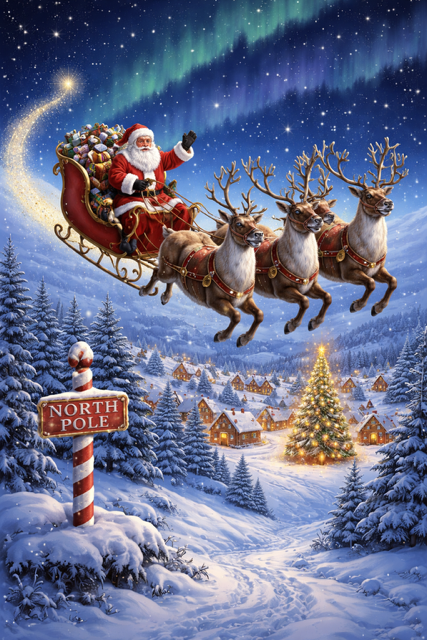
For many centuries, Saint Nicholas has been the center of holidays celebrations, but his connection to the North Pole is a much cooler creation, and its history is colder than you think. Children draw pictures of Santa’s snowy home at the very top of the world, and grown-ups talk about “his workshop in the Arctic” with surprising confidence, as though we’ve all seen it on a map.
Santa’s connection to the far North did not come from early Christian stories, or from legends of Saint Nicholas. But it grew over time, through folklore, exploration, and our need for a magical place unknown by everyone.
The North Pole is an actual place located north of Earth in the Arctic Ocean, north of Greenland. Many people do not know it’s a real location. There is no real landmass at the North Pole as it is mainly only shifting ice.
St. Nicholas became famous for secretly giving gifts to those in need, His legacy of gift-giving laid the foundation for the traditions surrounding Santa Claus. Santa Clause may be a myth to be parents, but you should never tell a kid that Santa is fake.
The history of Santa leads all the way back into the fourth century when he was a Christian bishop who lived in the town of Myra. Santa would often leave small gifts in the shoes of people who would leave them out for him. This tradition spread throughout Europe, and by the 16th century, Saint Nicholas had become a popular figure in much of Western Europe.